The Number on Your House Key
Key codes, valet scams and three simple ways to stop someone copying your house key without you knowing.
4/22/20269 min read
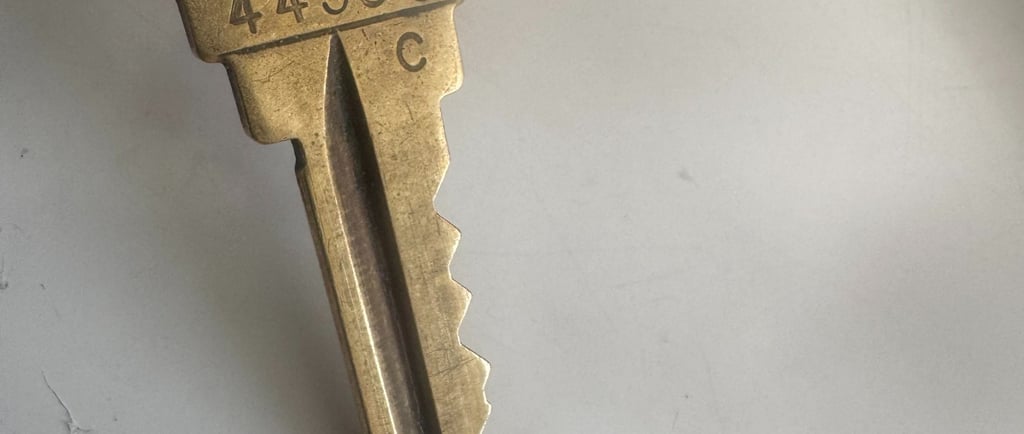
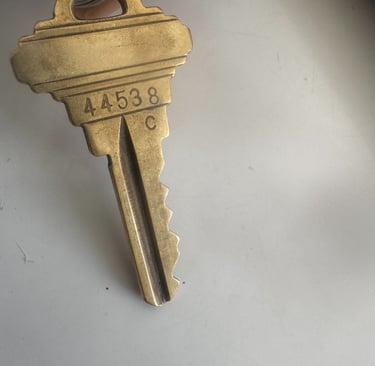
The Number Stamped on Your House Key: What It Means and Why It Could Get You Robbed
Most homeowners have never noticed the 5 or 6 digit number stamped on the head of their Schlage, Kwikset, or Yale house key. That number is your key code — the exact cut pattern of your key — and understanding it could save you hundreds of dollars, protect your home, and prevent a break-in you never saw coming.
What Is the Number on Your Key?
Pick up your house key right now and look at the flat part at the top — the part you hold when you turn the key. On most Schlage, Kwikset, Yale, Defiant, and other residential keys, you will find a number stamped into the metal. It is usually 4 to 6 digits long. On a Schlage key it might read something like 44538. On a Kwikset key it might be something like B62. On a Master padlock it might be a 3 or 4 digit code.
That number is called the key code or bitting code. It is not a serial number. It is not decorative. It is the precise mathematical specification of every cut on your key blade — the depth and position of each valley that either does or does not match your lock’s internal pins.
In other words: that number IS your key. Anyone who knows it can walk into any locksmith shop or key cutting kiosk, call out that number, and have a working copy of your key cut in under 60 seconds for under $5. No original key required. No lock to pick. No alarm to bypass. Just a number and a key cutting machine.
This is not a vulnerability that criminals invented. It is a feature of the key system — designed to help legitimate owners replace lost keys without needing a locksmith to pick the lock or replace the cylinder. But like most useful features, it can be misused if you are not aware of it.
🔍 Real Example:
A Schlage house key with the code 44538 stamped on it means the five cuts on that key are depths 4, 4, 5, 3, and 8. Any locksmith with a Schlage-compatible cutting machine can enter that code and produce a working key instantly. This is true everywhere in the United States.
Tip #1 — Save Your Key Code Like a Phone Number
This is the single most practical piece of advice we give every customer, and almost no one does it before they hear it from us.
Look at the code stamped on your Schlage, Kwikset, or Yale house key. Write it down. Then save it in your phone as a contact. Name the contact something memorable:
⦁ Mr. Schlage — 44538
⦁ House Key — B62
⦁ Front Door — 44538 Schlage
That’s it. You are done. You now have a permanent backup of your key that fits in your phone and costs nothing to store.
The next time you lose your keys — and statistically, most people lose their keys multiple times in a lifetime — instead of calling an emergency locksmith at midnight for a lockout service or paying to have your lock drilled and replaced, you call any locksmith during business hours, give them that code, and they cut you a new key on the spot. The key takes under a minute to cut. It costs under $5. You walk away with a working house key and your lock is untouched.
Compare that to the alternative: a midnight emergency lockout call with a service fee, plus the cost of drilling the lock, plus the cost of a new lock, plus the time to re-key everything. That is a $200 to $500 problem that a five-digit number stored in your phone prevents entirely.
✅ Action Step:
Before you finish reading this, find your original house key, locate the stamped code, and save it in your phone right now. Label it by brand and code so any locksmith can read it over the phone. If you have multiple locks (front door, back door, padlock), save each one separately.
Tip #2 — Never Give Your Original Key to a Valet
This one is more serious, and most people have never thought about it.
When you hand your keys to a valet, you are typically handing over your entire key ring. That key ring almost always includes your car key — which the valet needs. But it often also includes your house key, office key, gym locker key, and whatever else you carry daily.
Your original Schlage or Kwikset house key has that code stamped right on the head. A valet who wants to exploit this does not need to take your key. They do not need to copy it on the spot. All they need to do is take a clear photo of the key code on your house key and a clear photo of your vehicle registration, which in most states is kept in the glove box and includes your home address.
They now have two things: your home address and the exact specification to cut a working key to your front door. They do nothing immediately. They wait. Weeks or months pass. You forget about that valet, that restaurant, that hotel. Then one day, when you are at work or on vacation, they visit your address with a freshly cut $4 key and walk in the front door.
This is not a hypothetical scenario. It is a documented pattern of theft that has been reported in cities across the United States, including South Florida. The valet industry employs many honest, hardworking people. But it only takes one dishonest employee at one parking garage to turn a routine dinner into a home burglary months later.
What to Do Instead
The solution is simple and costs nothing. Before handing your keys to a valet, remove your house key from the ring. Leave it in your car, in your bag, or with your passenger. The valet only ever needs your car key.
If your car key and house key are on the same ring and cannot be separated quickly, consider getting a key organizer or a separate car key ring that keeps your house keys detached and easy to split off.
⚠️ Remember:
The valet needs your car key. They do not need your house key, your office key, or your gym key. Separate them before you hand anything over. This takes 5 seconds and eliminates the risk entirely.
Tip #3 — Make Copies. Give Away Copies. Never Give Away the Original.
Here is something most people do not know about key copies: they do not have the code stamped on them.
When you take your original Schlage key to a Home Depot, Walmart, Lowe’s, Ace Hardware, KeyMe kiosk, or Minute Key machine to get a copy made, the copy comes out as a blank metal key with the correct cuts but no stamped code. The machine reads the physical cuts on your key and reproduces them in metal — but it does not stamp the bitting code onto the new key because it does not need to. The copy works because the cuts match your lock, not because it carries any identifying information.
This means copies are fundamentally safer to give away than originals.
Who Should Get a Copy, Not the Original
⦁ Family members who need regular access to your home
⦁ Babysitters, nannies, or caregivers
⦁ Housekeepers or cleaning services
⦁ Contractors, plumbers, electricians doing work at your property
⦁ Neighbors you trust for emergencies
⦁ Property managers
Any of these people can receive a copy of your house key without any risk associated with the key code, because the copy carries no code. Even if the copy is lost, photographed, or ends up in the wrong hands, it contains no additional information beyond the physical cuts — which already require access to a key cutting machine to exploit.
Where to Get Copies Made
⦁ Home Depot — key cutting counter, most locations
⦁ Walmart — hardware section, most locations
⦁ Lowe’s — key cutting counter
⦁ Ace Hardware — widely available across South Florida
⦁ KeyMe kiosks — found in many grocery stores and pharmacies
⦁ Minute Key kiosks — found in many hardware and grocery stores
⦁ Any local locksmith — fastest and most precise, especially for high-security or worn keys
Key copies at these locations typically cost $2 to $6 per key. A locksmith copy may cost slightly more but will be cut more precisely, especially important for older or worn keys where a machine copy may have imperfect tolerances.
💡 Pro Tip:
Get copies made from a new or lightly used original key, not from an old worn one. Each generation of copying introduces small errors. If you copy a copy of a copy, the third-generation key may not work reliably. Always trace back to the original when making new copies.
Which Key Brands Stamp the Code on the Key?
Most major residential key brands stamp the bitting code on the key head. Here are the most common ones you will encounter in South Florida homes and businesses:
Brand Code Format Where Stamped
Schlage 5-digit numeric (e.g. 44538) Key head / bow
Kwikset Letter + 2 digits (e.g. B62) Key head / bow
Yale 4-6 digit numeric Key head / bow
Defiant (Home Depot) 5-digit numeric Key head / bow
Master Lock 3-4 digit numeric Key head / bow
Weiser 5-digit numeric Key head / bow
Medeco Code on paperwork, not key Registration card / dealer
Note: High-security key systems like Medeco and Mul-T-Lock typically do not stamp the full bitting code on the key, and their keys cannot be copied at standard retail kiosks. This is intentional and is part of what makes them high-security. If you have one of these systems, your key code is stored with your registered locksmith or on a key registration card.
The 3-Point Key Security Checklist
Here is everything covered on this page condensed into three actions you can take today:
1. Find the code stamped on your original Schlage, Kwikset, or Yale house key and save it in your phone as a contact. Label it by brand and code. Example: “Mr. Schlage — 44538”. Do this for every original key in your possession.
2. Before handing keys to any valet, parking attendant, or service provider, remove your house key from the ring. They need your car key. They do not need anything else. This takes five seconds and eliminates a serious and underreported risk.
3. Get copies made of your house keys at Home Depot, Walmart, Lowe’s, KeyMe, or any locksmith. Give copies to family, trusted contacts, and service providers. Keep your original key safe. Copies carry no code and are safe to share.
Frequently Asked Questions
Q: Is it actually possible to cut a key just from the code number?
A: Yes, absolutely. Any locksmith with a standard key cutting machine and the correct key blank can cut a working key from the bitting code alone in under 60 seconds. This is a standard, legitimate locksmith service used every day by people who have lost their keys. The code is a precise specification of every cut on the key blade.
Q: What if I cannot find the code on my key?
A: Some keys wear down over time and the stamped code becomes hard to read. Hold the key under a bright light at an angle — the number is usually easier to see with raking light. If the key is too worn to read, bring it to a locksmith who can decode the cuts directly from the key blade using a depth gauge or Lishi tool. We provide this service at Service R Us USA.
Q: Can I request a key without the code stamped on it?
A: Original manufacturer keys always come with the code. However, any copy made at a standard retail kiosk or locksmith will not have the code stamped — this happens automatically. If you want an original-style key without the code for security reasons, ask your locksmith to file or grind the stamped area smooth on a copy.
Q: Does this apply to car keys too?
A: Car keys are different. Modern car keys with transponder chips or smart key systems cannot be copied just from a code — they require programming to the vehicle’s immobilizer system. Some older mechanical car keys do carry a key code, but the risk profile is different because the code alone does not give access to the vehicle without the transponder. This post specifically addresses residential and commercial door keys.
Q: What if I already gave my original key to someone and I am concerned?
A: The most effective solution is to re-key your lock. Re-keying changes the internal pin configuration of your existing lock cylinder so that only a new key works. Your existing lock hardware stays in place, just the pins change. It is inexpensive — typically $20 to $50 per lock — and takes about 10 minutes per cylinder. Service R Us USA provides mobile re-keying across Broward County and Miami-Dade.
Q: Is the valet scam really common?
A: It is more common than most people realize, and significantly underreported because the connection between a valet interaction and a burglary that happens weeks or months later is rarely made by victims or investigators. The best protection is prevention — simply remove your house key before handing over your car keys.
Q: Do copies really not have the code on them?
A: Correct. Key cutting machines at retail locations and locksmith shops reproduce the physical cuts on the key blade but do not stamp any code onto the copy. The machine traces or photographs the original’s cut pattern and reproduces it in a blank — no code transfer occurs. This is why copies are fundamentally safer to distribute than originals.
Q: Can Service R Us USA cut me a key from my code if I have lost my original?
A: Yes. If you have your key code saved (Schlage, Kwikset, Yale, or other standard residential brands), call us and we can cut you a new key from the code. Mobile service available across Fort Lauderdale, Davie, Hollywood, and all of Broward County. Call (954) 358-3024.
SEO Settings
SEO TITLE: The Number on Your House Key: Key Codes, Valet Scams & 3 Tips to Protect Your Home | Service R Us USA
META DESCRIPTION: That stamped number on your Schlage or Kwikset key is your key code — anyone can copy your key from it in 60 seconds. Fort Lauderdale locksmith shares 3 security tips every homeowner needs to know. (155 chars)
SLUG: /key-code-security-tips-house-key
FOCUS KEYWORD: key code house key security
SECONDARY KEYWORDS: Schlage key code, Kwikset key code, valet key scam, key bitting code, lost house key replace, re-key lock Fort Lauderdale, locksmith Davie FL, home security tips locksmith, key copy no code
IMAGE ALT TEXT: ‘Schlage key with bitting code stamped on head Fort Lauderdale’ | ‘Kwikset key code 5 digit number residential key’ | ‘locksmith cutting key from code Service R Us USA Davie FL’
INTERNAL LINKS: Link ‘re-keying’ to your residential services page. Link ‘mobile locksmith’ to your service area page. Link ‘high-security keys’ to any relevant page.
Lost your key? Have your code ready — we cut it in minutes.
Service R Us USA — Licensed Mobile Locksmith | Florida License #01225LK | NASTF Member
(954) 358-3024
Davie • Fort Lauderdale • Hollywood • Broward County • Miami-Dade
(954) 932-0736
We are not the cheapest, but we charge fair and competitive prices
We offer free estimate over the phone